
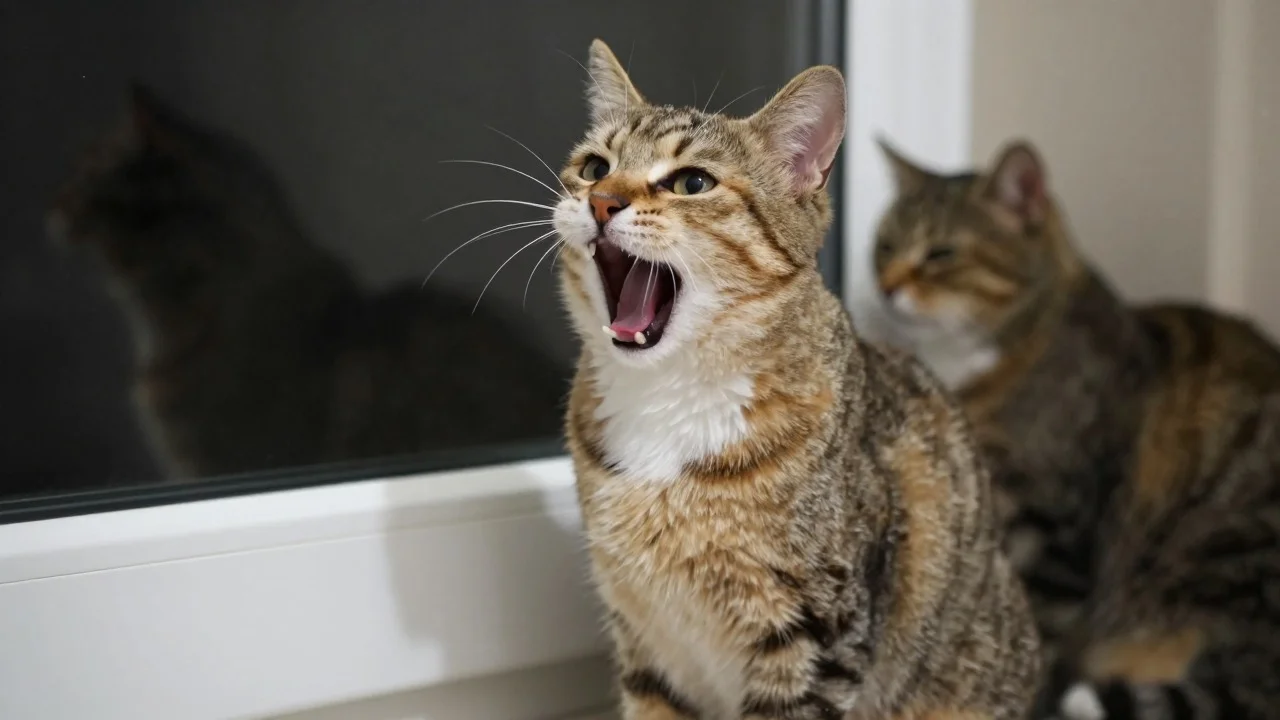
Few English words sound as much like their meaning as caterwauling. The term describes a loud, harsh, catlike cry or similarly unpleasant noise. Americans may use it literally for cats or figuratively for people, music, arguments, or complaints.
| Key fact | Plain-English explanation |
|---|---|
| Basic meaning | A loud, unpleasant, wailing or shrieking sound |
| U.S. pronunciation | Roughly “KAT-er-waw-ling” |
| Related verb | Caterwaul |
| Common associations | Cats, arguments, bad singing, loud complaints |
| Word history | Recorded from late Middle English |
| Similar words | Yowling, wailing, screeching, howling |
| Tone | Vivid, informal, often negative |
Caterwauling means a loud, harsh, wailing sound that resembles a cat’s cry. In American English, it can describe actual cat vocalizations, unpleasant singing, noisy arguing, or any piercing, discordant sound. The related verb is caterwaul, meaning to make that kind of shrill cry or complain noisily.
Key Takeaways
- The word usually describes a harsh, drawn-out, unpleasant cry.
- It originally referred closely to the sounds associated with cats.
- Modern speakers can apply it to people, music, arguments, alarms, or complaints.
- The American pronunciation is roughly “KAT-er-waw-ling.”
- Its history reaches back to late Middle English.
- “Yowling” is its closest everyday synonym, though the terms carry slightly different shades of meaning.
What Does Caterwauling Mean?
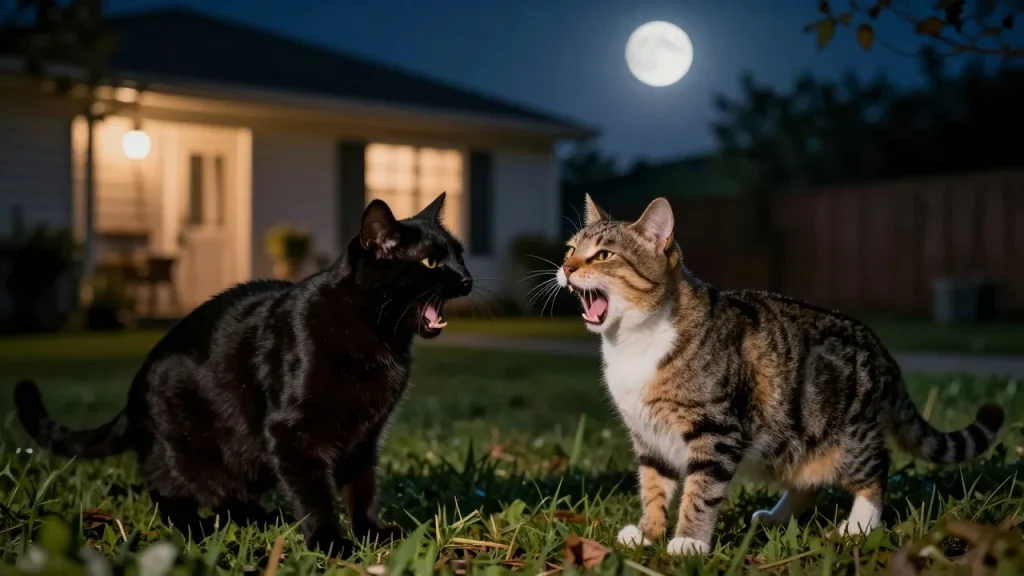
The simplest meaning is a loud, unpleasant, wailing sound resembling a cat. Cambridge defines the noun as a high, unpleasant noise made by a person or animal. Collins similarly connects the term with shrieking, yowling, and high-pitched moaning.
The word does not need to describe an actual cat. Someone might use it for painful singing, an argument next door, or piercing musical sounds. American Heritage also records a related verb sense involving a noisy argument.
That flexibility makes the term more expressive than a neutral word such as “noise.” It suggests something grating, dramatic, uncontrolled, or difficult to ignore. The speaker usually disapproves of the sound being described.
Readers who enjoy unusual animal expressions can also explore Magbuff’s raining cats and dogs explainer. That phrase shows another memorable way cats entered everyday English.
How Do You Pronounce the Word in American English?
In U.S. English, the pronunciation is approximately KAT-er-waw-ling. Cambridge gives the American IPA as /ˈkæt̬.ɚ.wɑː.lɪŋ/. The strongest stress falls on the opening “cat” sound.
The base verb, caterwaul, sounds roughly like “KAT-er-wawl.” Adding “-ing” produces the form used for an ongoing action or the resulting noise. Oxford also records the American pronunciation with the same recognizable opening and “wawl” sound.
A useful memory trick is to hear “cat” at the beginning. The word itself developed around the idea of a catlike cry. That link between sound and meaning makes the pronunciation easier to remember.
Magbuff has another pronunciation-focused explainer covering the word heir and its silent initial letter. Both examples show why hearing a word can clarify its spelling and usage.
Where Did the Word Come From?
The word has been recorded since late Middle English. Etymonline traces the verb to the late fourteenth century, including the earlier form caterwrawen. Its history appears closely connected with words for a tomcat and a yowling sound.
One proposed source connects cater with Middle Dutch cater, meaning “tomcat.” The second element relates to waul, a word for yowling or crying. American Heritage gives a similar history involving Middle English and Low German forms.
The exact path is not completely certain, which is common with old sound-imitating words. Dictionaries agree that the feline connection is central to its development. By later centuries, speakers were applying the term beyond cats to other harsh noises.
Is It a Noun, Verb, or Adjective?
Caterwaul works as both a verb and a noun. The verb means making a shrill, unpleasant cry, while the noun names such a cry. Dictionaries also record caterwauling as the “-ing” form and as a noun.
English also lets the “-ing” form modify another noun. A writer might describe caterwauling guitars, voices, or animals using that participial construction. Oxford, for example, illustrates the verb with loud musical sounds rather than a literal cat.
Context normally makes the grammatical role clear. “The cats caterwaul” uses the verb, while “the caterwaul outside” uses the noun. An “-ing” form can describe either an activity or the character of a sound.
How Americans Use the Word Figuratively
American speakers sometimes use the word for more than animal noises. A critic might apply it to unpleasant singing or harsh instrumental sounds. A writer could also use it for noisy public complaining without suggesting anyone sounds exactly like a cat.
The figurative sense usually carries criticism. Calling music a “caterwaul,” for example, communicates more than saying it is loud. The wording suggests that the listener finds the sound grating or chaotic.
The term can also add humor because its sound is unusually colorful. It feels more vivid than ordinary choices such as “complaining” or “shouting.” That makes it useful in descriptive writing when a strong negative tone fits.
For more vocabulary and language-focused reading, Magbuff’s Education section collects additional plain-English explainers. These pages focus on meanings, pronunciation, usage, and contextual distinctions.
Caterwaul vs. Yowl, Wail, Screech, and Howl
These words overlap, but they are not perfectly interchangeable. Choosing the closest word depends on pitch, duration, emotion, and context. The comparison below shows the main differences in ordinary American usage.
| Word | Typical sound | Common feeling or context | Key distinction |
|---|---|---|---|
| Caterwaul | Harsh, drawn-out, discordant | Cats, arguments, complaints, bad music | Strongly suggests an unpleasant catlike quality |
| Yowl | Long, loud cry | Cats, distress, mating behavior | Often the closest direct synonym |
| Wail | Long cry | Grief, pain, distress | Strong emotional association |
| Screech | Sharp, piercing sound | Brakes, birds, voices | Usually sharper and more sudden |
| Howl | Long, loud call | Dogs, wolves, wind, people | Often deeper and less specifically catlike |
Cambridge directly gives “yowl” as a synonym for the base verb. Collins also groups it with screaming, howling, and wailing. The differences therefore concern nuance rather than strict boundaries.
If the sound is distinctly harsh and reminds you of fighting cats, caterwaul is especially fitting. If grief dominates the scene, wail may work better. For a brief, piercing noise, screech often provides greater precision.
Examples in Natural American English
The word becomes easier to understand once you see several contexts. Some examples describe real animal sounds, while others are intentionally figurative. Each example below keeps the unpleasant or discordant quality associated with the term.
| Context | Example sentence |
|---|---|
| Cats | The neighborhood cats began to caterwaul beneath our bedroom window. |
| Singing | His off-key performance sounded like a caterwaul from the hallway. |
| Argument | We could hear the neighbors caterwauling through the apartment wall. |
| Music | The guitar began to caterwaul during the loudest part of the song. |
| Complaints | The meeting dissolved into angry caterwauls from several frustrated attendees. |
| Night noise | A strange caterwaul outside woke everyone shortly after midnight. |
These examples are original rather than copied from dictionary entries. They show how one word can cover animals, people, music, and conflict. The shared idea is an unpleasant sound that demands attention.
Why Do Cats Make This Kind of Sound?
Cats can produce long, intense vocalizations for several reasons. Unspayed females may vocalize during heat, while other cats may react to fear, pain, discomfort, or territorial conflict. Sudden changes in a cat’s normal vocal behavior can also deserve veterinary attention.
The ASPCA notes that intact cats may yowl when seeking mates. Medical problems can also increase unusual vocalization, especially when a cat feels distressed. A veterinarian can help when the behavior appears suddenly or becomes persistent.
That animal behavior helps explain why the English word feels so intense. The original image is not a quiet household meow. It evokes a loud, sustained cry that can sound urgent or disturbing.
Frequently Asked Questions
Is caterwauling always about cats?
No, the term can describe people, music, arguments, and other harsh noises. Its history is strongly connected with feline cries, but usage expanded far beyond literal cats. Modern dictionaries provide examples and definitions covering both human and animal sounds.
Is “caterwaul” an insult?
It can sound insulting when applied to someone’s singing, speaking, or music. The term suggests that the sound is shrill, unpleasant, or discordant. Use a neutral alternative when you do not want to express criticism.
What is the closest synonym?
“Yowl” is probably the closest simple synonym in many contexts. Cambridge lists it directly as a synonym for the verb. “Wail,” “howl,” and “screech” can also work depending on the sound.
Is the word old-fashioned?
The word is established English, but it is less common than everyday terms like “yowl” or “scream.” Its unusual sound can make it feel literary, humorous, or deliberately colorful. That quality often explains why writers still choose it.
Can humans caterwaul?
Yes, dictionaries explicitly apply the word to people as well as animals. A person can caterwaul by making a loud, harsh cry or by complaining noisily. The usage is usually figurative and strongly negative.
The Simple Takeaway
Caterwaul is a vivid word for a harsh, wailing, catlike noise. It began with a strong feline association and later expanded to people, arguments, music, and complaints. In American English, it works best when an ordinary word such as “noise” feels too weak.
Remember the word by separating it into its most recognizable ideas: “cat” and a wailing sound. Use it when you want expressive language and a clearly negative tone. Choose “yowl,” “wail,” or “screech” when one of those sounds describes the situation more precisely.
For more unusual English expressions, continue with Magbuff’s raining-cats-and-dogs article or browse its Education collection. Comparing meanings, origins, and natural examples helps unfamiliar vocabulary become easier to remember. It also makes colorful words easier to use without forcing them into the wrong context.