
The phrase “dog chasing tail” often describes harmless play, especially in puppies discovering their bodies. Dogs may also spin briefly when they’re excited or bored. Repeated, frantic, painful, or hard-to-interrupt episodes deserve closer attention because medical or behavioral problems can look similar.
Occasional tail chasing is often normal, especially in playful puppies. Frequent or hard-to-interrupt spinning can point to boredom, stress, itching, pain, anal gland trouble, or compulsive behavior. Contact your veterinarian when the behavior starts suddenly, causes injury, or appears with other signs of discomfort.
| Key fact | What it means for owners |
|---|---|
| Occasional spinning | Often harmless during play or excitement, especially in younger animals. |
| Frequent episodes | May reflect boredom, stress, discomfort, or a repetitive behavioral problem. |
| Biting or chewing | Raises concern for itching, pain, fleas, skin disease, or irritation. |
| Scooting or rear-end licking | Anal gland discomfort may be involved. |
| Hard to interrupt | Can be a warning sign for compulsive behavior. |
| Sudden behavior in a senior | Consider pain, cognitive changes, or another medical cause. |
Key takeaways
- Brief, playful spinning is usually less concerning than persistent fixation.
- Puppies commonly investigate their tails during normal play.
- Fleas, allergies, pain, and anal gland problems can trigger rear-end attention.
- Stress and boredom may encourage repetitive behaviors.
- Tail biting, bleeding, or sudden severe episodes warrant veterinary advice.
- Calm redirection works better than punishment or excited attention.
Dog Chasing Tail: The 7 Most Common Reasons
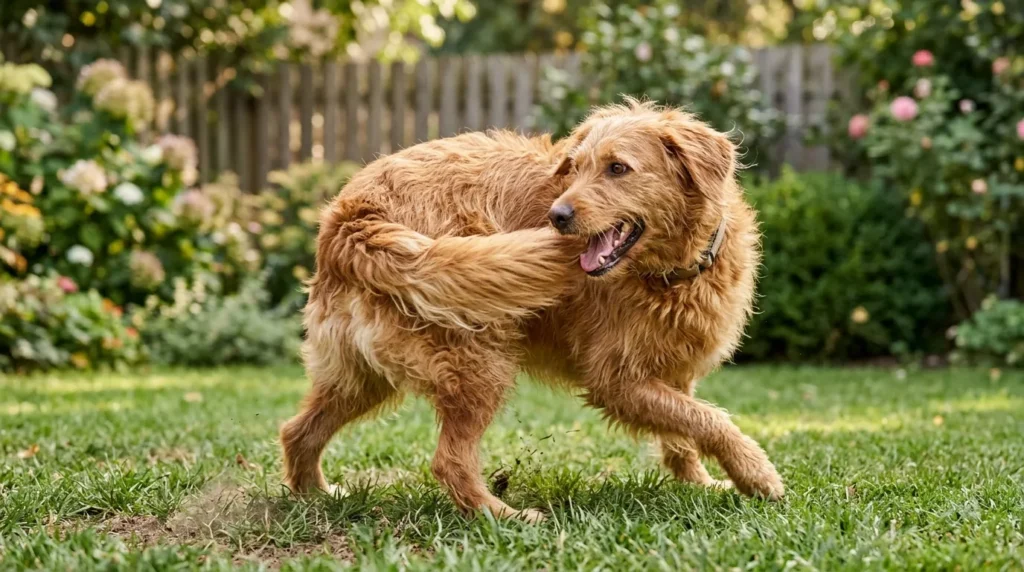
Tail chasing is a behavior rather than a diagnosis. Context often matters more than one isolated spin. Watch when it starts, how long it lasts, and whether your pet stops easily.
1. Play and curiosity
Puppies often investigate moving body parts while playing. A wagging tail becomes an easy target because it moves within sight. Many young animals lose interest as they mature and discover other games.
2. Boredom or unused energy
Understimulated pets may create repetitive games when they lack activity. Sniff walks, food puzzles, training sessions, and safe play provide better outlets. Reduced spinning after adding enrichment can suggest boredom contributed to the pattern.
3. Attention from people
People can accidentally reward spinning with laughter, shouting, filming, or treats. Even negative attention may make the routine more rewarding. Calm redirection makes more sense than turning each episode into a family event.
4. Fleas, allergies, or irritated skin
Fleas and irritated skin can make the area near the tail uncomfortable. Your pet may spin, lick, chew, or bite while trying to reach the itch. Redness, scabs, hair loss, or repeated biting should prompt a veterinary check.
5. Anal gland discomfort
Anal gland problems can cause pressure or pain near the rear end. Scooting, licking, unusual odor, and sudden tail-focused behavior may appear together. A veterinarian can examine the area and treat the underlying problem when necessary.
6. Pain, injury, or neurologic problems
Pain around the tail, back, hips, or nearby tissues can quickly change behavior. Neurologic problems can also produce repetitive or unusual movements in some cases. Sudden onset, yelping, weakness, disorientation, or unresponsiveness needs professional evaluation.
7. Stress or compulsive behavior
Stress can turn a repeated action into a coping pattern. Compulsive behavior becomes difficult to interrupt and may replace eating, resting, play, or social contact. Veterinary and behavior professionals may need to work together when the pattern becomes persistent.
Magbuff’s guide to trigger stacking in dogs explains how several smaller stressors can accumulate during one day. That concept can help when spinning follows excitement, household changes, or repeated stressful events. Keeping the daily routine predictable may also reveal which situations precede the behavior.
Normal Play vs. a Warning Sign
Playful episodes are usually brief and easy to interrupt. The animal returns to another activity without appearing distressed or fixated. Concern rises when episodes become frequent, intense, painful, or difficult to stop.
| Pattern | More consistent with play | More concerning |
|---|---|---|
| Frequency | Occasional | Frequent or increasing |
| Duration | Brief | Prolonged or repeated |
| Interruptibility | Stops easily | Quickly returns or cannot stop |
| Body language | Loose and playful | Tense, distressed, or fixated |
| Tail condition | Normal skin and coat | Redness, wounds, or hair loss |
| Other signs | None | Scooting, crying, licking, weakness |
A 2011 observational study reviewed 400 online tail-chasing videos. About one-third showed habitual or hard-to-distract behavior that researchers considered clinically concerning. The sample was not random, so that figure does not estimate current prevalence among U.S. pets.
The same research also showed how people can misread repetitive behavior as entertainment. Laughter and encouragement appeared often in the reviewed videos. That finding supports watching the animal’s behavior before assuming every spinning episode is harmless.
What to Do When the Behavior Keeps Happening
Start by observing rather than immediately correcting the behavior. Your goal is to identify patterns involving activity, stress, discomfort, or attention. Assess persistent cases medically before treating them as a training problem.
- Record an episode. Capture the beginning, the spinning, and how the animal responds when you call it.
- Check for visible irritation. Look for fleas, redness, swelling, wounds, hair loss, or repeated chewing.
- Redirect calmly. Ask for a familiar cue such as sit or come, or offer a favorite toy to retrieve.
- Add healthy enrichment. Try sniffing walks, food puzzles, training games, chewing activities, or structured play.
- Contact your veterinarian when needed. Book an exam for sudden, persistent, painful, or injurious behavior.
Redirection works best when the replacement activity is already familiar. Magbuff’s professional dog training guide covers the value of training and mental stimulation. Short practice sessions can give an energetic pet a more productive task.
Avoid yelling, chasing, or dramatically reacting to the spinning. Those responses can add attention and may accidentally strengthen the habit. Calmly shift attention elsewhere, then reward appropriate activity rather than the spinning itself.
Why Sudden Tail Chasing in an Older Pet Deserves Attention
New repetitive behavior deserves extra attention when it appears later in life. Pain, sensory changes, neurologic problems, or cognitive dysfunction can contribute to unusual repetitive actions. Skin irritation and anal gland trouble can also begin at any age.
Watch for changes beyond the spinning itself. These can include altered sleep, confusion, unusual pacing, accidents indoors, weakness, or increased anxiety. Tell your veterinarian when each change began because timing may help guide the examination.
A senior that suddenly focuses on the rear end should not be assumed to be bored. New behavior can be one of the first visible signs that something feels different. Prompt assessment is especially sensible when the change appears without an obvious playful trigger.
A Simple Observation Log for Your Veterinarian
A short observation log can make a veterinary visit more useful. Record facts rather than trying to diagnose the cause yourself. Two or three days of notes may reveal timing or triggers you otherwise miss.
Track these details for each episode.
- Date and time of each episode.
- What happened in the few minutes before.
- Approximate episode duration.
- Whether calling your pet interrupts the behavior.
- Any biting, licking, scooting, crying, or scratching.
- Changes in appetite, sleep, exercise, or bathroom habits.
- Visible changes to the skin, coat, or tail.
- Recent household or schedule changes.
Video can add useful context because repetitive behaviors may not happen during an appointment. Try to record from a safe distance without encouraging another episode. Share both the video and your written notes with the veterinary team.
This approach also helps separate isolated play from a developing pattern. A single playful spin looks different from repeated episodes occurring at similar times. Tracking provides more useful evidence than relying on memory after several stressful days.
Frequently Asked Questions
Is dog chasing tail normal in puppies?
Brief and interruptible chasing can be normal in puppies. Young animals may investigate the tail because movement attracts their attention during play. Frequent fixation, injury, or difficulty stopping still deserves veterinary advice.
Why does my pet chase and bite the tail?
Biting is more concerning than brief, playful spinning. It can occur with fleas, allergies, skin irritation, pain, wounds, or anal gland discomfort. Check for repeated chewing before the skin becomes damaged or infected.
Can fleas make a pet chase its tail?
Yes, fleas often irritate areas around the lower back and tail base. Affected animals may turn, lick, scratch, or chew while trying to reach the itch. Ask your veterinarian about appropriate parasite prevention when fleas are possible.
Can anxiety cause repetitive spinning?
Stress and anxiety can contribute to repetitive behaviors in susceptible animals. The behavior may become a coping response when stressful situations keep occurring. Persistent compulsive patterns require professional assessment because you must also consider medical causes.
Should I stop the behavior every time?
An occasional playful spin may not require intervention. Redirect repeated episodes calmly to another activity rather than punishing them. Seek veterinary advice when the behavior becomes intense, frequent, injurious, or difficult to interrupt.
When should I call a veterinarian?
Call when spinning begins suddenly, worsens quickly, causes wounds, or includes pain or distress. You should also seek advice when the animal cannot be distracted from repeated episodes. Changes in movement, awareness, sleep, or normal behavior are further reasons to seek an examination.
The Bottom Line
Occasional spinning can be harmless puppy play or a brief burst of excitement. Frequent fixation deserves a closer look because itching, pain, stress, and medical conditions can create similar behavior. The best response depends on frequency, context, physical signs, and how easily the episode stops.
Observe first, redirect calmly, and arrange veterinary care when red flags appear. For more animal-care and behavior content, browse Magbuff’s Pets section. Early attention can prevent a minor irritation or repeated habit from becoming harder to manage.