
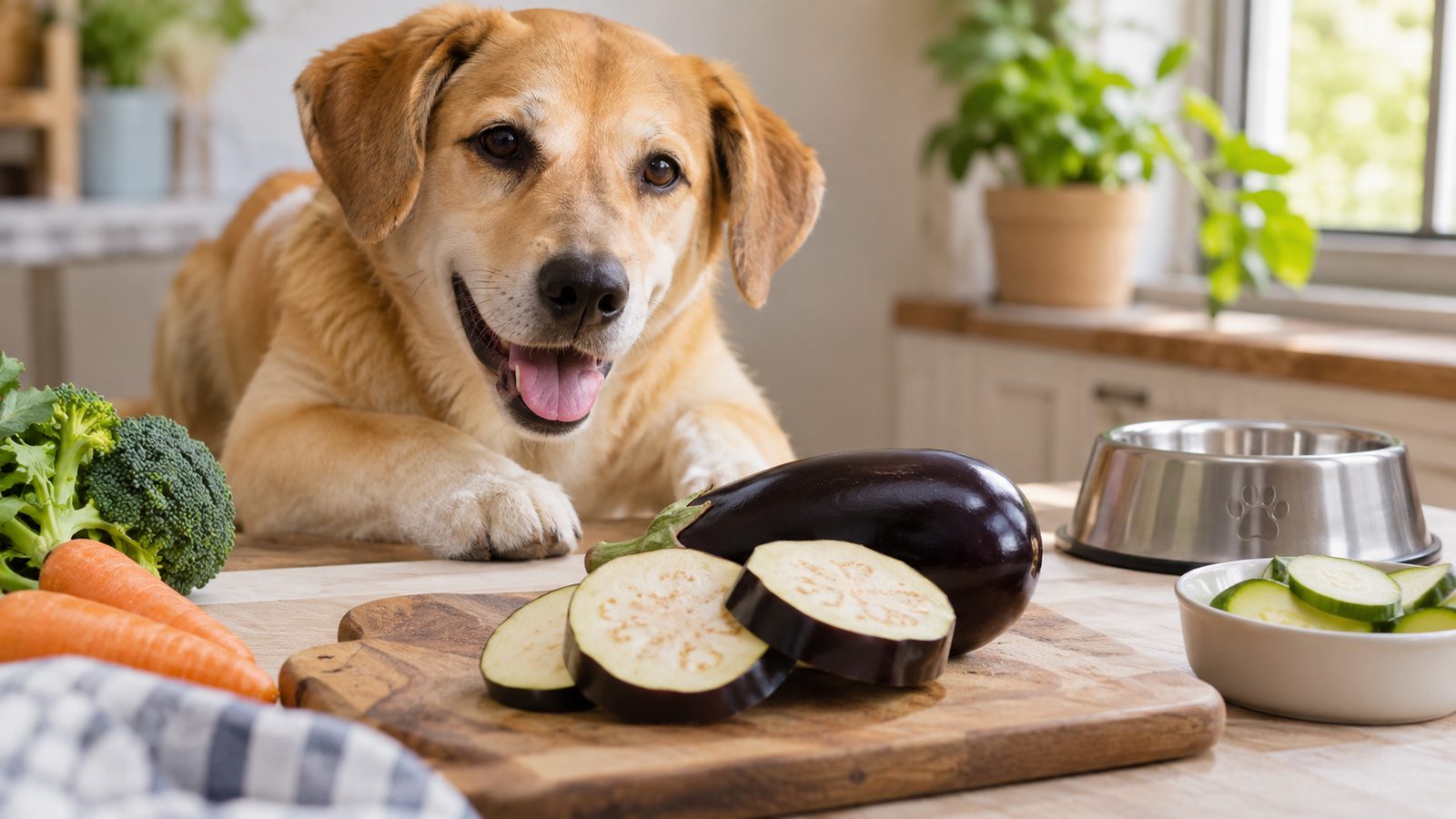
Can dogs eat eggplant safely? Most healthy dogs can have small amounts of plain, properly prepared flesh as an occasional treat. The American Kennel Club recommends introducing a small amount and watching for digestive problems. The safest approach is simple preparation and a small serving. Remove the stem, wash the vegetable, and cook it without seasonings. Keep leaves, flowers, rich sauces, onions, and garlic away from your pet. Quick answer: Most dogs can eat small amounts of plain, cooked eggplant flesh as an occasional treat. Remove the stem and avoid seasonings, onions, garlic, and rich sauces. Start with one small piece and monitor your dog afterward. Call your veterinarian if significant symptoms develop.
| Key question | Quick answer |
|---|---|
| Safe for most healthy dogs? | Yes, in small amounts |
| Best preparation | Plain, cooked, and cut into small pieces |
| Raw pieces | Possible, but cooked pieces are easier to chew |
| Leaves and flowers | Avoid |
| Stem | Remove before serving |
| Seasonings | Avoid salt, garlic, onion, and heavy sauces |
| Portion | Treat-sized, not a meal |
| Main concern | Digestive upset or reaction |
| Veterinary help | Seek advice for significant symptoms or plant ingestion |
Can Dogs Eat Eggplant Safely?
The edible fruit is generally considered safe when offered in moderation. AKC guidance says the fruit is not truly toxic in normal amounts. Higher concentrations of defensive plant compounds occur in greener plant parts. This vegetable belongs to the nightshade family, which naturally produces compounds including solanine. ASPCA resources identify solanine as a toxic principle in several nightshade plants. Leaves and other plant material therefore deserve more caution than the edible flesh. Individual dogs can also respond differently to unfamiliar foods. A dog with a sensitive stomach may develop loose stool or vomiting. Start with a tiny serving instead of offering a large portion immediately.
The Safest Way to Prepare It
Preparation matters more than creating a complicated recipe. Plain food reduces exposure to ingredients that may cause separate problems. Small pieces also reduce choking risk for smaller animals. For more food and care guidance, browse the Magbuff Pets section. Use this simple method:
1. Wash the vegetable thoroughly. 2. Remove the stem and any attached leaves. 3. Peel it if your dog has trouble chewing tougher foods. 4. Cut the flesh into small, bite-sized cubes. 5. Steam, bake, or roast it until soft. 6. Leave out butter, oil, salt, sauces, and seasonings. 7. Let the pieces cool before serving. 8. Offer one small piece the first time.
AKC guidance recommends removing the stem and cutting servings into small pieces. It also notes that cooked pieces are usually easier for dogs to eat. A dog does not need this food for balanced nutrition. Complete dog food should remain the foundation of the daily diet. Human foods work better as occasional treats than as nutritional replacements.
How Much Can a Dog Have?
There is no universal serving size for every breed and life stage. Body size, age, activity, health, and normal calorie intake all matter. Your veterinarian can provide specific guidance for dogs with dietary restrictions. Treats should remain a small part of daily calories. The AKC recommends keeping all treats within about 10 percent of daily caloric intake. That allowance includes every snack your pet receives, not only vegetables. For a first taste, begin smaller than the normal treat allowance. One bite-sized piece lets you check tolerance without offering much food. Stop serving it if vomiting, diarrhea, itching, or unusual discomfort appears.
Raw Versus Cooked: Which Is Better?
Raw flesh is not automatically poisonous, but cooking offers practical advantages. Softer pieces are easier for many animals to chew and swallow. Cooking also makes the texture less firm for puppies and small breeds. The AKC states that dogs can eat raw pieces, although cooked food is often easier to manage. Fetch also advises caution with raw pieces because they may create a choking hazard. Cooking does not make unsafe ingredients in a recipe acceptable. Garlic, onion, excess salt, cheese, and heavy oils create separate concerns. A plain preparation remains the better choice.
Why Eggplant Parmesan and Fried Dishes Should Stay Off the Menu
A restaurant-style dish contains much more than a vegetable. Breading, cheese, oil, salt, garlic, and onion may appear in common recipes. Those additions make the finished dish inappropriate for a canine treat. Fetch specifically warns against sharing eggplant parmesan because of ingredients such as cheese, breading, onion, and garlic. High-fat dishes may also trigger digestive trouble in sensitive animals. The same principle applies to fried, pickled, or heavily seasoned versions. Give your dog a plain piece before preparing the human meal instead. That method makes ingredient control much easier.
What Symptoms Should You Watch For?
Eating too much unfamiliar plant food can cause stomach upset. The most common problems are vomiting, diarrhea, abdominal discomfort, or reduced energy. AKC guidance recommends contacting a veterinarian when concerning symptoms develop. Watch your pet closely after a first serving. Mild digestive changes may show that the food does not suit that individual dog. Repeated vomiting, marked weakness, or unusual behavior deserves prompt professional advice. Possible warning signs include:
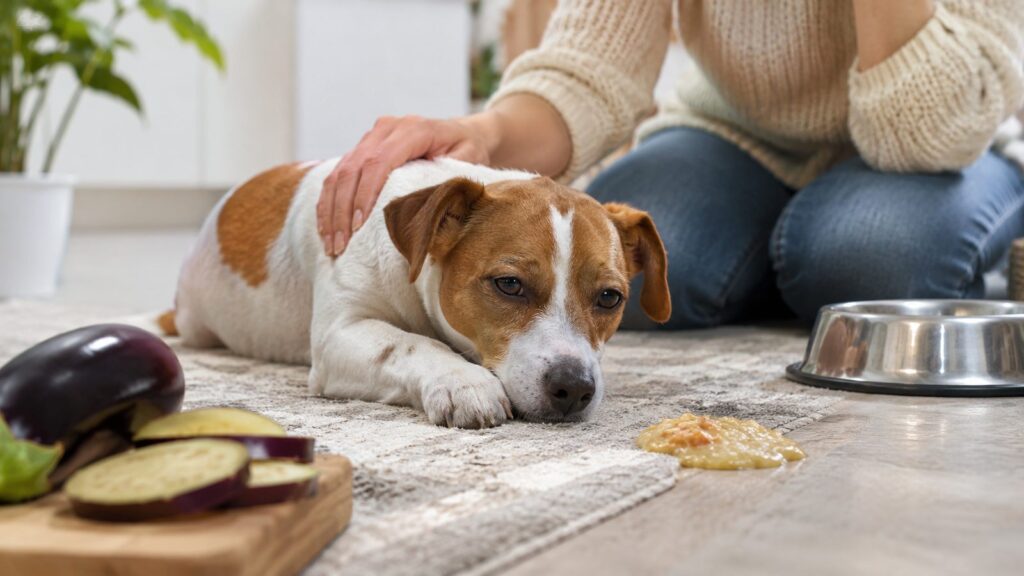
* Repeated vomiting * Persistent diarrhea * Excessive drooling * Abdominal discomfort * Unusual weakness * Significant drowsiness * Loss of appetite * Confusion or abnormal behavior
ASPCA nightshade guidance lists severe gastrointestinal problems, weakness, drowsiness, and behavioral changes among possible poisoning signs. Those findings apply to toxic nightshade exposures rather than normal treat portions.
What If Your Dog Ate a Large Amount?
First determine what your pet swallowed and how much was eaten. Plain edible flesh presents a different situation from stems, leaves, flowers, or a seasoned meal. Keep any packaging or recipe details available when calling for advice. Do not induce vomiting unless a veterinarian specifically tells you to do so. Contact your veterinary clinic when the amount seems substantial or symptoms appear. ASPCA Animal Poison Control is another U.S. resource for suspected toxic exposures. Timing and details can help the veterinary team assess the situation. Note your dog’s approximate weight, the amount eaten, and the time of ingestion. Also report any vomiting, diarrhea, weakness, drooling, or behavioral changes.
Are There Any Nutritional Benefits?
The vegetable contains fiber, potassium, vitamins, and antioxidant compounds. Those nutrients can contribute to a varied human diet. A small canine treat provides only a limited nutritional contribution. Dogs already eating a complete commercial diet should receive their essential nutrients from that food. Treats should add enjoyment without displacing balanced meals. This distinction matters more than searching for special health benefits from one vegetable. AKC identifies fiber, potassium, and several vitamins among its nutrients. It also stresses that the food should not replace a complete and balanced diet.
Foods and Ingredients to Keep Out of the Bowl
The safest serving is plain and uncomplicated. Human recipes often introduce ingredients that create more concern than the vegetable itself. Checking the full ingredient list prevents accidental exposure. Avoid serving it with:
* Garlic * Onion * Onion powder * Garlic powder * Heavy salt * Rich cheese sauces * Large amounts of oil * Spicy sauces * Fried breading * Pickling brine
If your pet often grabs unattended food, basic training can help reduce kitchen scavenging. Magbuff covers broader safety and behavior concerns in its dog tail-chasing guide. The site also discusses professional dog training benefits.
A Simple First-Time Feeding Checklist
Trying a new treat should be controlled rather than spontaneous. Introduce only one unfamiliar ingredient at a time. That approach makes an unwanted reaction easier to identify. Before offering a piece, check these points:
* Your dog is healthy and eating normally. * The stem and leaves are removed. * The serving contains no seasoning. * The piece is small enough to chew safely. * No garlic or onion touched the serving. * You are offering only a small amount. * You can monitor your pet afterward.
Behavior around food can also change during stressful periods. Magbuff’s guide to trigger stacking in dogs explains how several stressors can accumulate.
Frequently Asked Questions
Can dogs eat eggplant skin?
The skin is not generally classified as toxic in normal food portions. Still, it can be tougher for some dogs to chew. Peeling it may make a first serving easier to handle.
Can puppies have it?
Puppies have smaller bodies and changing nutritional requirements. New treats should therefore be introduced conservatively. Ask your veterinarian before adding unfamiliar foods to a young puppy’s routine.
Can dogs eat cooked pieces every day?
There is little reason to make this a daily food. Your pet gains more from a nutritionally complete diet designed for dogs. Occasional small treats are the more sensible approach.
What if my dog ate the plant leaves?
Treat plant material more cautiously than the edible fruit. Solanine occurs in nightshade plants and can produce significant clinical signs. Contact your veterinarian or poison-control service for exposure guidance.
Is the vegetable good for dogs with sensitive stomachs?
A sensitive dog may not tolerate an unfamiliar high-fiber food well. Begin with a tiny portion or skip it completely. Your veterinarian can recommend safer treats for recurring digestive problems.
The Bottom Line
Most healthy dogs can have a little plain, cooked flesh without problems. Keep portions small, remove plant parts, and avoid ingredients used in rich human recipes. Stop offering it if your pet develops digestive or allergic symptoms. The goal is not to add another required food to your dog’s diet. Instead, treat it as an optional snack that must fit within balanced nutrition. When health conditions or unusual symptoms are involved, veterinary advice should take priority. —