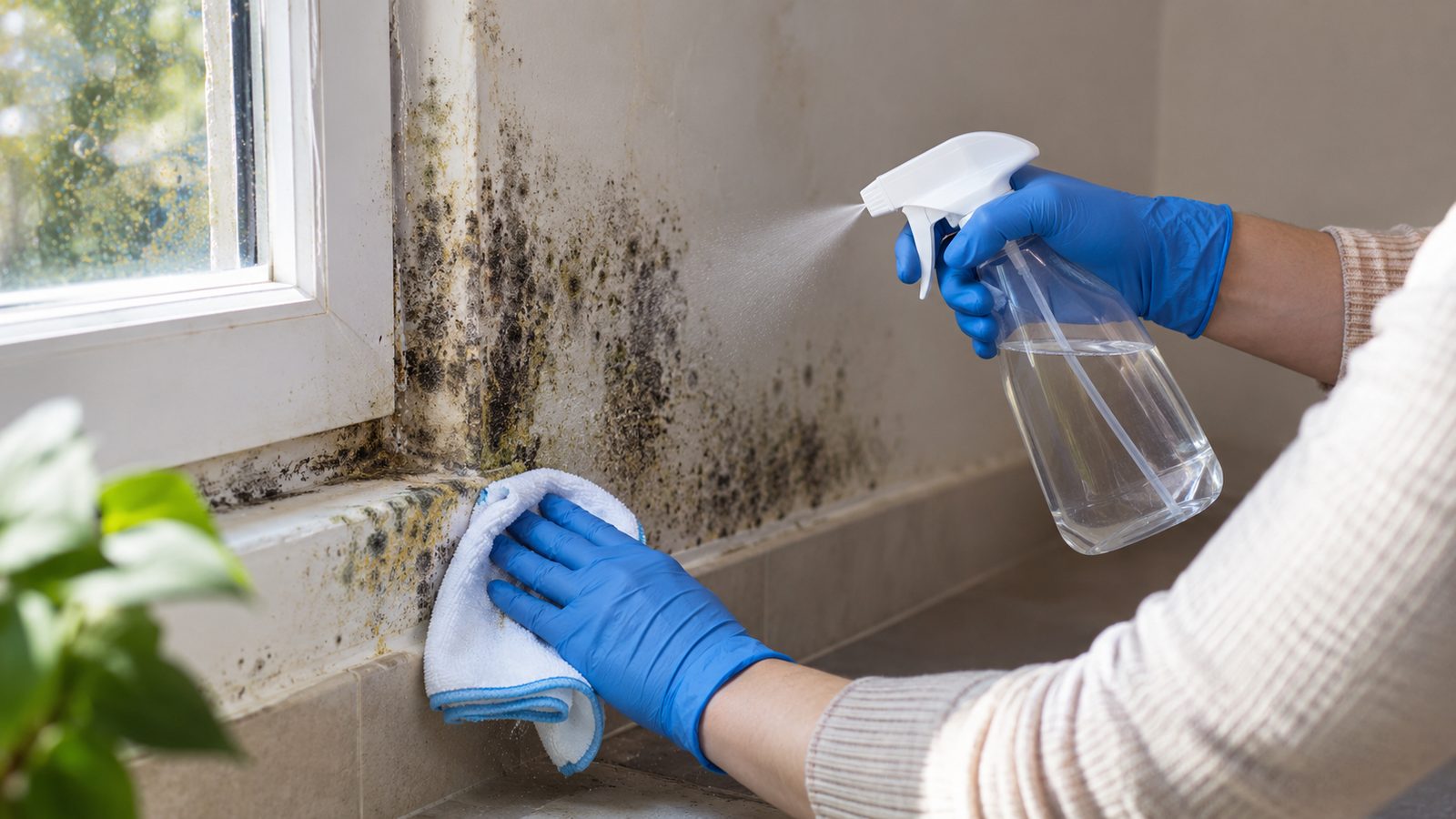
Does alcohol kill mold? It can kill some fungal growth it contacts on suitable surfaces. However, rubbing alcohol is not a complete solution for household mold problems. Effective cleanup also requires removing growth, drying the area, and correcting the moisture source. Alcohols such as isopropyl alcohol have fungicidal properties under controlled conditions. Still, household mold often grows inside porous materials where liquid cannot reach everything. The EPA therefore focuses mold cleanup guidance on removal and moisture control rather than simply killing organisms.
Quick Answer
Rubbing alcohol may kill or reduce surface mold on some hard, nonporous materials. It should not replace physical mold removal or moisture control. Porous drywall, insulation, carpet, and similar materials can hold growth below the surface, so spraying the visible area may leave contamination behind.
Key Facts at a Glance
| Question | Practical answer |
|---|---|
| Can rubbing alcohol affect mold? | Yes, alcohol has fungicidal activity and may work on exposed surface growth. |
| What concentration is commonly used? | 70% isopropyl alcohol falls within the CDC’s 60% to 90% effective alcohol range. |
| Is stronger alcohol always better? | No. Higher concentration does not automatically make household mold cleanup more effective. |
| Does it work well on drywall? | It is not a dependable solution for mold growing inside porous drywall. |
| Is killing mold enough? | No. Dead growth can still cause allergic reactions and should be removed. |
| What prevents mold from returning? | Fix leaks, control humidity, remove contamination, and dry affected materials. |
| When should you call a professional? | EPA guidance recommends considering professional help when growth exceeds about 10 square feet. |
Key Takeaways
* Rubbing alcohol can have antifungal effects on exposed growth. * Hard, nonporous surfaces are better candidates than porous building materials. * Household mold cleanup should remove growth instead of merely trying to kill it. * Moisture control is the most important step for preventing regrowth. * Isopropyl alcohol is highly flammable and requires careful handling. * Larger mold problems may require professional remediation.
Does Alcohol Kill Mold on Household Surfaces?
The answer depends heavily on the surface and the extent of contamination. CDC guidance describes ethyl and isopropyl alcohol as fungicidal disinfectants. It also states that alcohol concentrations below 50% lose antimicrobial activity quickly. A common 70% isopropyl solution sits within the CDC’s 60% to 90% range for effective antimicrobial activity. That does not make it an EPA-recommended mold remediation method for walls or building materials. The CDC guidance concerns chemical disinfection rather than complete residential mold remediation. This distinction matters because household mold is often more than surface contamination. Growth can extend into drywall, wood, carpet backing, insulation, and other absorbent materials. A surface treatment cannot reliably correct contamination hidden deeper inside those materials.
Why Killing Mold Is Only Part of the Job
You may assume that killing visible growth solves the problem. EPA guidance specifically warns against that approach. Dead mold can remain allergenic, so contaminated material still needs proper cleaning or removal. Moisture is also necessary for indoor growth to continue. If a leaking pipe, condensation problem, or high humidity remains, new growth can appear. The EPA calls moisture control the key to controlling indoor mold. This is especially relevant around HVAC equipment and ducts. Moist areas around coils, drains, or ductwork can support microbial growth and musty odors. Magbuff’s guide to regular duct cleaning and indoor allergens discusses how moisture and contaminants can collect within HVAC systems.
Where Rubbing Alcohol May Be Useful
Small spots on hard, nonporous materials are the most reasonable use case. Examples can include certain glass, metal, tile, and sealed surfaces. Always test a hidden area first because solvents can damage finishes or coatings. Preservation guidance also discusses 70% rubbing alcohol for certain objects after surface testing, and it warns that the product may damage paints and wood finishes. That limitation is important whenever appearance or surface coatings matter. Alcohol may also have specialized cleaning uses outside building remediation. For example, Magbuff’s suede sneaker cleaning guide mentions careful spot treatment with rubbing alcohol. That use should not be confused with treating mold inside walls or other building materials.
Where You Should Not Rely on Rubbing Alcohol
Porous materials create the biggest limitation. Drywall, ceiling tiles, insulation, unfinished wood, upholstery, and carpet can absorb moisture and support growth internally. Treating the visible surface may not reach contamination inside the material. Large or recurring patches also require a different approach. EPA guidance says homeowners can usually handle areas under about 10 square feet themselves. Larger areas, major water damage, or contaminated water can justify professional assessment and remediation. HVAC contamination deserves added caution because the system can move particles through the home. A persistent musty smell may point toward moisture or microbial growth near ducts or coils. Magbuff’s guide to musty and unusual HVAC odors explains several common sources.
How to Clean a Small Moldy Area Safely
For a limited patch on a hard surface, focus first on removing contamination rather than sterilizing the room. The EPA advises scrubbing hard surfaces with detergent and water, then drying them completely. This approach also reduces the material available to trigger reactions. Follow these steps for a small, manageable area:
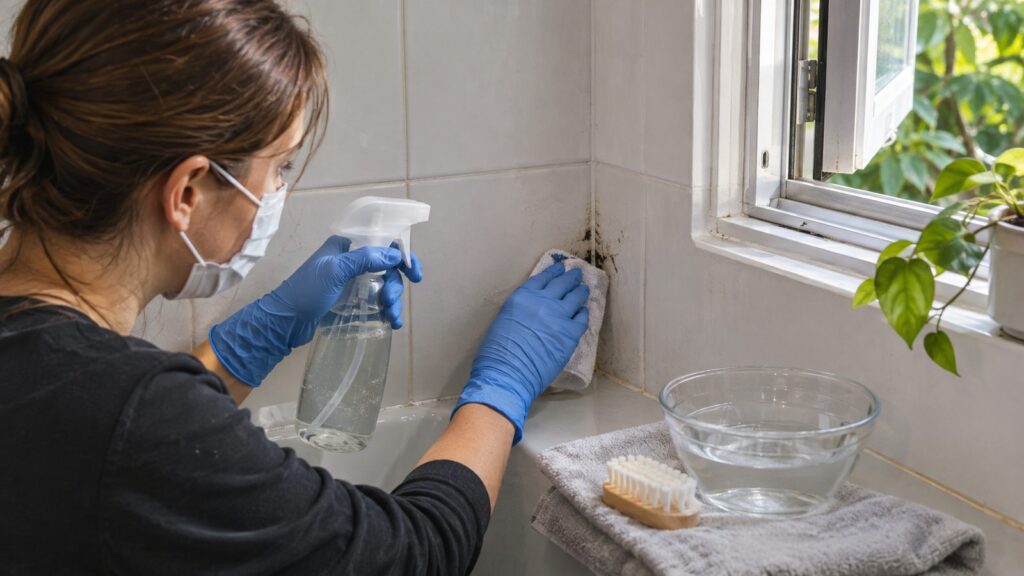
1. Find the moisture source. Check for leaks, condensation, poor ventilation, or persistent humidity. 2. Correct the water problem. Cleanup will not last if the area stays damp. 3. Wear suitable protection. CDC recommends at least an N95 respirator, gloves, and eye protection during mold cleanup. 4. Clean visible growth. Scrub appropriate hard surfaces with detergent and water. 5. Dry the surface completely. Remaining moisture can allow growth to return. 6. Discard unsalvageable porous materials. Heavily affected absorbent materials may need replacement. 7. Monitor the area. Recheck for moisture, odor, staining, or renewed growth.
If you use isopropyl alcohol on a compatible surface, treat it as a supplemental surface cleaner. Follow the product label and maintain good ventilation. Never assume spraying alone replaces cleaning, drying, and moisture correction.
Is 70% or 91% Isopropyl Alcohol Better?
Many people assume 91% must work better because it contains more alcohol. CDC guidance does not support a simple “stronger is better” rule. It identifies 60% to 90% solutions in water as the optimum bactericidal range for alcohol disinfectants. A standard 70% solution sits comfortably within that range. Higher concentrations also evaporate quickly, which can shorten surface contact. More importantly, concentration does not solve the penetration problem found with porous building materials. Avoid improvising strong chemical mixtures for mold cleanup. Different cleaners can react dangerously when combined. Follow manufacturer labels and never mix household cleaning chemicals unless their instructions specifically allow it.
Safety Risks When Using Isopropyl Alcohol
Isopropyl alcohol is a flammable liquid with a low flash point. NIOSH classifies it as a Class IB flammable liquid. Keep it away from flames, sparks, cigarettes, heaters, and other ignition sources. Ventilation also matters because vapor can build up indoors. Avoid spraying large quantities around confined spaces or operating equipment. Gloves and eye protection can reduce direct exposure during cleaning. People with asthma, allergies, chronic lung conditions, or weakened immune systems should avoid mold cleanup when possible. CDC guidance identifies these groups as having greater health risks from exposure. A qualified remediation company may be the safer choice for those households.
What Works Better for Long-Term Mold Control?
The most effective strategy is removing contamination and changing the conditions that allowed it to grow. Repair leaking roofs, plumbing, windows, or appliances quickly. Improve ventilation where bathrooms, kitchens, basements, or laundry areas stay damp. The EPA recommends drying wet building materials within 24 to 48 hours when possible. Rapid drying reduces the opportunity for new colonies to establish. Dehumidification and improved airflow can also help after the original water source is fixed. Water management outside the home can matter too. Poor drainage may keep foundations, crawl spaces, or lower walls damp after heavy rain. Magbuff’s guide to yard drainage solutions covers ways standing water can be redirected around a property.
When to Call a Mold Remediation Professional
Professional help becomes more sensible as the affected area grows. EPA guidance uses approximately 10 square feet as an important reference point for homeowner cleanup. Significant water damage can also increase the complexity of remediation. Call a professional if growth keeps returning after the moisture problem seems fixed. Hidden contamination may exist behind walls, beneath floors, or within HVAC components. Sewage-related water damage also calls for specialized handling. Choose a contractor with specific mold-remediation experience. Ask what standards they follow and how they will address the moisture source. A useful remediation plan should cover removal, drying, containment when needed, and prevention.
Frequently Asked Questions
Does alcohol kill mold on walls?
It may affect exposed fungal growth, but walls create important limitations. Painted drywall can hide contamination within its paper facing or gypsum. Cleaning or replacement may be necessary when moisture penetrates the material.
Can 70% isopropyl alcohol remove black mold?
Color does not determine the correct cleanup method. CDC guidance says mold color does not indicate whether growth is more or less dangerous. Visible contamination should be removed while the underlying moisture problem is corrected.
Will rubbing alcohol stop mold from coming back?
Not by itself. Regrowth usually depends on whether moisture remains available. Fixing leaks, improving ventilation, and keeping materials dry provide better long-term control.
Should I use bleach instead?
CDC states that mold can be removed from hard surfaces using household products, soap and water, or a properly diluted bleach solution. EPA guidance does not recommend routine biocide use during mold remediation. Physical removal and moisture correction remain central regardless of the cleaner selected.
Can I clean a large mold problem myself?
Small areas may be manageable for many homeowners. EPA guidance places the common DIY reference point below roughly 10 square feet. Larger areas or extensive water damage deserve professional evaluation.
The Bottom Line
Rubbing alcohol can have a place in cleaning small amounts of exposed growth on compatible hard surfaces. It should not be treated as a universal household mold remover. The material, contamination depth, affected area, and moisture source matter more than the bottle’s alcohol percentage. For lasting results, remove visible contamination and dry the affected area completely. Correct leaks, condensation, drainage, or humidity problems that supplied the moisture. Get professional help when the affected area is large, recurring, hidden, or connected with major water damage. The most useful goal is not creating a sterile house. EPA guidance notes that eliminating every indoor mold spore is neither practical nor necessary. Keeping building materials clean and dry is what prevents those spores from becoming another active problem. —