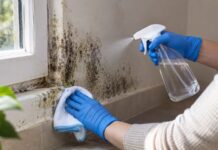
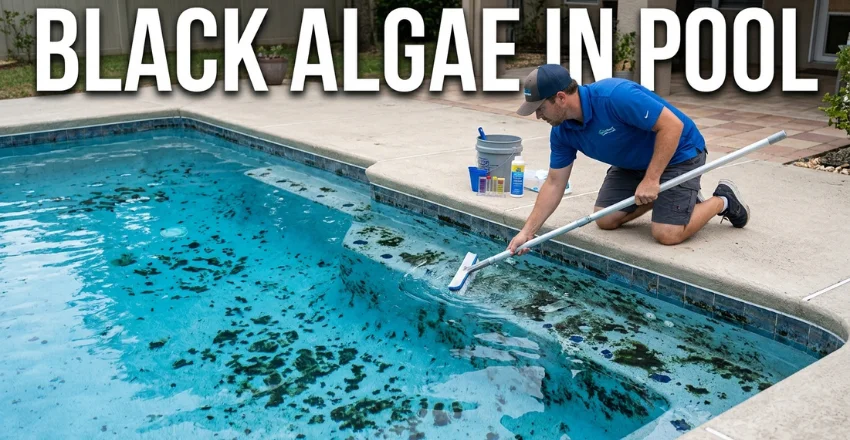
Finding black algae in pool surfaces can be frustrating because ordinary cleaning often leaves it behind. These dark colonies cling tightly to porous finishes and resist normal sanitizer levels. Successful removal usually requires brushing, chemical treatment, filtration, and repeated follow-up.
To remove black algae in pool surfaces, identify the growth first and brush affected areas to break its protective layer. Use stainless steel only on plaster, concrete, or gunite surfaces. Then apply shock and a compatible algaecide according to their labels, clean the filter, keep swimmers out, and repeat brushing until the spots disappear.
Black Algae Treatment at a Glance
| Task | What to do | Key caution |
|---|---|---|
| Confirm the problem | Look for dark, raised, stubborn spots | Do not treat every dark stain as algae |
| Check water | Test sanitizer and pH before treatment | Use reliable test results |
| Brush | Break the protective surface layer | Stainless steel only on plaster, concrete, or gunite |
| Shock | Use a pool shock labeled for your pool | Follow the exact product dose |
| Add algaecide | Choose one labeled for this type of growth | Follow label timing and compatibility |
| Filter | Run circulation and remove captured debris | Clean or backwash as directed |
| Retest | Check water before reopening | Keep swimmers out until levels return to range |
How to Identify Black Algae Before Treating the Pool
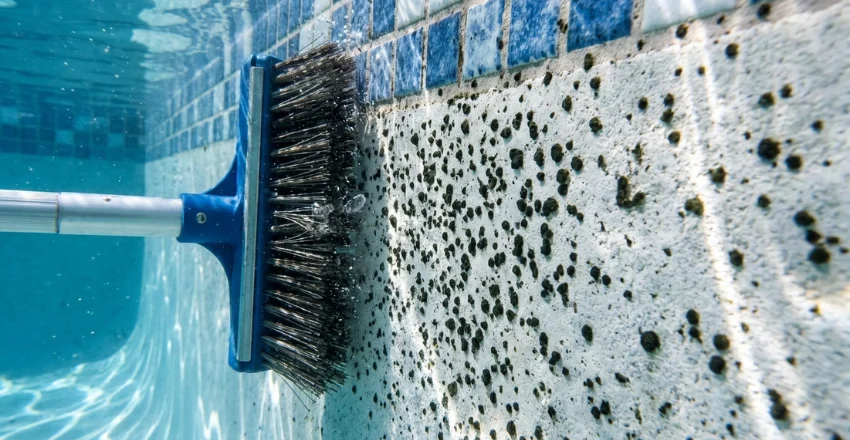
True black algae usually appears as dark blue-green or nearly black spots. The colonies often develop on steps, corners, grout lines, and rough pool surfaces. They tend to remain firmly attached when lightly brushed.
The growth is commonly called algae, although it is associated with cyanobacteria. It can develop a protective outer layer that reduces chlorine penetration. This protection helps explain why brushing is central to treatment.
Dirt and mustard algae usually behave differently when brushed. Loose dirt moves, while mustard growth often produces a dusty cloud when disturbed. A flat discoloration that never changes may instead be a stain or surface issue.
Plaster and gunite are especially vulnerable because their surfaces can provide tiny places for colonies to attach. Smooth vinyl and fiberglass surfaces are less favorable for deep attachment. Dark marks on those finishes still deserve careful identification before adding strong chemicals.
Common Water Targets Before You Start
Start by testing the water with a dependable test kit. Commonly cited U.S. guidance gives a typical chlorine range of 1–4 ppm for pools. A commonly cited pH range is 7.0–7.8.
Those are routine ranges, not instructions for creating a shock level. The shock product label should determine treatment strength and timing. Different products, stabilizer levels, and pool conditions can require different procedures.
Do not guess chemical doses from pool appearance alone. Know the pool volume before adding any treatment. Recheck the water as treatment progresses and before anyone returns to swimming.
How to Remove Black Algae in Pool Safely
1. Test the water and prepare the pool
Remove leaves and other visible debris before starting. Empty skimmer baskets and confirm that circulation equipment is working correctly. Testing first gives you a useful baseline for later comparisons.
Check pH and sanitizer before adding treatment products. If you need to adjust, follow the relevant chemical label exactly. Never combine chemicals in a bucket or measuring container.
2. Brush every affected spot with the correct brush
Physical brushing helps open the protective coating over each colony. Work each visible spot thoroughly, including steps, corners, and low-flow areas. This improves contact between the treatment chemicals and the attached growth.
Use a stainless-steel pool brush only on plaster, concrete, or gunite surfaces. Do not use stainless steel on a vinyl liner. Vinyl and fiberglass generally require a softer nylon brush to avoid surface damage.
If your finish is unusual, follow its manufacturer’s brush recommendations. Decorative, coated, or specialty finishes may have additional restrictions. Protecting the surface is as important as removing the growth.
3. Apply pool shock according to the product label
After brushing, apply an appropriate shock treatment that is labeled for your pool. The goal is to expose the colonies before the sanitizer attacks them. Do not increase the dose because the spots look severe.
Follow the label for quantity, circulation, application method, and waiting periods. Pool shock products can differ significantly in concentration and chemistry. Follow the label instructions; they take priority over generic online dosing advice.
Keep everyone out of the pool while shock treatment is underway. Do not reopen the pool based only on elapsed time. Test the water and wait until chemical levels are back within the appropriate swimming range.
4. Use an algaecide labeled for the problem
A compatible algaecide can support treatment and help control regrowth. Choose a product specifically labeled for the type of algae and your pool surface. Apply only the amount stated on the label.
Do not assume algaecide and shock should enter the water together. Some product directions require separation between treatments. Read both labels before deciding the application order.
Continue brushing after treatment when the label permits it. Persistent colonies may require more than one cleaning cycle. Stopping as soon as the surface looks improved can allow remaining growth to return.
5. Run circulation and clean the filter
Treatment dislodges organic material that must leave the water. Keep circulation operating for the period recommended by your equipment and chemical instructions. The filter can then capture suspended debris.
Clean the filter after the treatment cycle or when pressure indicates cleaning is needed. Backwash sand or DE systems when appropriate for that equipment. Clean cartridge elements according to the filter manufacturer’s instructions.
A dirty filter can reduce circulation and keep debris moving through the pool. Regular equipment care also supports other household systems. Magbuff discusses this wider maintenance approach in its professional maintenance guide.
6. Brush again and remove remaining debris
Inspect every original problem area after the first treatment cycle. Brush surviving spots again with the surface-appropriate tool. Vacuum loose material using the method recommended for your filtration setup.
Pay close attention to shaded corners, steps, ladders, and areas with weaker circulation. These locations can hold persistent colonies. Repeated physical cleaning is often necessary because the growth attaches so firmly.
Do not keep adding chemicals without testing between applications. Chemical levels can remain elevated after the water looks clear. Use test results to decide when another labeled treatment is appropriate.
7. Retest before allowing anyone to swim
Test chlorine and pH after treatment finishes. Commonly cited routine targets remain 1–4 ppm chlorine and pH 7.0–7.8. Follow your sanitizer and pool equipment guidance if it specifies a narrower operating range.
Keep swimmers out until the water returns to the proper range. The water should also be clear enough to see the pool bottom. Never use appearance alone to decide whether chemical levels are safe.
If spots continue returning despite repeated correct treatment, consider professional inspection. Persistent discoloration may involve deep surface growth or a stain that was misidentified. A pool professional can also check circulation and finish condition.
Essential Pool Chemical Safety Rules
Handle pool chemicals carefully because incompatible products can react dangerously. Never mix chlorine with acid or with other pool chemicals. CDC guidance warns that mixing chlorine and acid can release toxic gases.
Read the entire product label before opening or measuring the chemical. Use the recommended protective equipment and work in a well-ventilated location. Keep each chemical in its original labeled container.
If a label specifically directs pre-dissolving, add the chemical to water, never water to the chemical. Adding water to concentrated pool chemicals can cause a violent reaction. Do not pre-dissolve a product unless the label tells you to.
Never combine leftover products because their labels sound similar. Different chlorine products can also be incompatible. Close one chemical container before opening another.
Keep swimmers away during chemical additions and treatment. Do not let anyone return until testing confirms that levels are back in range. Always follow any longer waiting period stated by the product manufacturer.
How to Prevent Black Algae From Returning
Consistent sanitizer levels are one of the strongest preventive measures. Test chlorine and pH regularly instead of waiting for visible trouble. Correct circulation also helps sanitizer reach corners and other low-flow areas.
Brush pool surfaces as part of routine maintenance. Pay extra attention to textured plaster, steps, grout, and shaded areas. Small colonies are easier to address before they become firmly established.
Keep the filtration system clean and operating correctly. Remove leaves, dirt, and other debris before they create additional sanitizer demand. A maintenance schedule can prevent several problems from occurring at once.
Clean equipment that has been used in contaminated water. Brushes, floats, toys, and swimwear can carry material between bodies of water. Washing or disinfecting suitable items reduces this transfer risk.
Weather also changes pool maintenance demands through heat, rain, and debris. Magbuff’s guide to weather effects on home water systems offers broader seasonal maintenance context. You can find more property-care topics in Magbuff’s Home Improvement section.
Mistakes That Make Treatment Less Effective
Using the wrong brush is one common mistake. Stainless steel can help on suitable hard plaster surfaces but can damage softer finishes. Always match the brush to the pool surface before scrubbing.
Another mistake is relying on shock without first brushing the colonies. Their protective layer can limit chemical contact. Mechanical cleaning and chemical treatment work better as a coordinated process.
Adding several chemicals together is a much more serious mistake. Never mix pool products unless a manufacturer explicitly provides a combined system with those instructions. Separate products by label and follow every required waiting period.
Finally, do not forget the filtration system after the spots begin fading. Dead material still needs to leave the water. Cleaning or backwashing the filter helps finish the treatment process.
Frequently Asked Questions
Can black algae in pool surfaces come back after shocking?
Yes, spots can return when treatment affects only the exposed surface. Firmly attached colonies can remain in pores or protected areas. Repeated brushing, proper sanitation, filtration, and follow-up testing reduce the chance of recurrence.
Can I use a stainless-steel brush on a vinyl pool liner?
No, stainless steel should not be used on a vinyl liner. Use a softer nylon brush that is suitable for the liner instead. Always check the brush and liner manufacturer’s care instructions before scrubbing.
Is black algae dangerous to swimmers?
Visible growth is a reason to stop swimming and correct the pool conditions. Treatment also involves elevated chemical levels that make swimming inappropriate. Keep everyone out until treatment is finished and test results have returned to the proper range.
Should I add algaecide before or after shock?
There is no universal sequence for every product combination. Some manufacturers direct users to shock first and add algaecide later. Follow the labels for both products rather than combining them based on a generic timetable.
How often should I clean the filter during treatment?
Filter cleaning depends on filter type, pressure, debris load, and manufacturer instructions. Heavy algae treatment can load the filter faster than normal operation. Check pressure and follow your filter manual for cleaning or backwashing.
Keep the Pool Clear After Treatment
Removing stubborn dark growth requires more than pouring one chemical into the water. Correct identification, surface-safe brushing, labeled chemical use, filtration, and follow-up testing all matter. A repeatable maintenance routine makes future outbreaks easier to prevent.
Treat chemical safety as part of the cleaning process, not a separate concern. Never mix chlorine with acid or other chemicals, and follow every product label. Keep swimmers out until testing shows that water conditions have safely returned to range.